
Starting a new way of eating can feel overwhelming, but it does not have to be perfect. Our vegan challenge offers a practical and approachable path to explore fresh ingredients without the pressure of total lifestyle perfection.
This guide follows a complete timeline, starting with essential preparation and concluding with a personal review. You will discover helpful tips, nutritious recipes, and smart grocery planning strategies designed for everyday American life.
We provide the support you need to build realistic habits that last. By joining this 30-day vegan challenge, you gain the tools to understand how these meals fit into your busy schedule while enjoying delicious, wholesome food.
Key Takeaways
- Learn how to prepare for a month of mindful eating.
- Access simple recipes that fit a busy American lifestyle.
- Master grocery planning to save time and money.
- Build sustainable habits without needing to be perfect.
- Review your progress with a structured end-of-month reflection.
Vegan challenge / 30-day vegan Plant-based diet: What to Expect
Whether you are a seasoned omnivore or just curious, this 30-day plan helps you explore the benefits of veganism with ease. Embarking on this journey is a transformative experience that allows you to reset your palate and discover new, vibrant ingredients.
How the 30-day vegan challenge works
The challenge is designed as a progressive roadmap to ensure you feel supported at every stage. You will begin with a preparation phase, followed by four distinct weekly milestones: Days 1–7, Days 8–14, Days 15–21, and Days 22–28. The final two days, Days 29–30, are dedicated to reviewing your progress and deciding on your future path.
Each week introduces new skills, from mastering simple meatless meals to exploring complex flavors. This structured approach helps you build sustainable habits rather than relying on temporary fixes. By the end of the month, you will have a clear understanding of how a plant-based diet fits into your unique lifestyle.
Who can benefit from a plant-based diet reset
This program is perfect for anyone looking to improve their energy levels or digestion. It is particularly helpful for curious omnivores who want to reduce their meat intake without feeling overwhelmed. If you are seeking a structured way to transition, this reset provides the necessary guidance to make the shift feel natural and rewarding.
Setting realistic goals for going vegan
Success in this challenge comes from focusing on consistency rather than perfection. It is important to set goals that prioritize learning and discovery over rigid restrictions. Remember that every meal is an opportunity to practice new routines that support your long-term health.
Avoid the pressure to be flawless from day one. Instead, embrace the process of finding plant-based alternatives that you truly enjoy. By keeping your expectations flexible, you are much more likely to maintain your progress and feel positive about your veganism journey.
Prepare for Your 30-Day Vegan Challenge
Success in your 30-day journey starts long before you take your first bite of tofu. By taking a few proactive steps, you can move beyond relying on willpower alone and create a sustainable path forward. These vegan beginner tips will help you build a foundation that lasts well beyond the first month.
Choose your starting date and personal goals
Pick a start date that allows you to focus on your new habits without major life stressors. Whether you choose a Monday or the first of the month, ensure your calendar is relatively clear of major travel or high-pressure events during the first week. Setting clear, achievable goals is essential for staying motivated.
Define what success looks like for you. Are you aiming for better digestion, increased energy, or simply exploring new flavors? Writing these goals down helps you stay focused when you are going vegan for the first time.
Audit your current pantry and eating habits
Before you head to the store, take a look at what you already have in your kitchen. Many staples like rice, beans, pasta, and spices are already plant-based and ready to use. Identifying these items early saves you money and reduces food waste.
Observe your current shopping patterns and common meal times. If you usually grab a quick sandwich for lunch, look for plant-based alternatives like hummus or veggie wraps. This audit helps you identify which habits need a slight adjustment rather than a total overhaul.
Plan support for dining out, travel, and social events
Social situations can feel intimidating, but they are manageable with a little foresight. Research restaurant menus online before you go out to find plant-based options. If you are traveling, pack reliable snacks like nuts, dried fruit, or protein bars to avoid being caught without a meal.
Communication is one of the most helpful vegan beginner tips for social events. Let friends or family know about your dietary choices in advance so they can help you feel included. Having a plan for these moments ensures that going vegan remains a positive experience throughout your entire challenge.
Build a Balanced Vegan Meal Plan
Mastering vegan nutrition. starts with understanding how to balance your daily plate. You do not need to be a professional chef to create a successful vegan meal plan that keeps you energized throughout the day.
The goal is to prioritize variety and dependable ingredients rather than complicated recipes. By focusing on satisfying portions, you can easily maintain your new lifestyle without feeling deprived.
Include plant-based protein at every meal
Protein is the foundation of sustained energy. You should aim to include a source of plant-based protein in every sitting to support muscle health and satiety.
Try incorporating versatile staples like tofu, tempeh, lentils, or chickpeas into your dishes. For example, adding silken tofu to a morning smoothie or tossing roasted chickpeas onto a salad provides a simple boost to your vegan nutrition.
Combine whole grains, vegetables, fruits, and healthy fats
A balanced plate relies on the synergy of different food groups. When you combine whole grains with colorful vegetables and healthy fats, you create a meal that is both nutrient-dense and delicious.
Consider practical combinations like quinoa paired with steamed broccoli and tahini dressing. You might also enjoy oatmeal topped with fresh berries and walnuts, or whole-grain toast layered with smashed avocado and hemp seeds.
Plan breakfasts, lunches, dinners, and snacks
Distributing your food intake throughout the day helps prevent hunger spikes. A consistent vegan meal plan ensures you have reliable options ready when you need them most.
Start your morning with a fiber-rich bowl of oats, then move to a hearty grain bowl for lunch. For dinner, focus on a stir-fry featuring beans or tofu, and keep snacks like fruit paired with nut butter on hand to bridge the gaps between meals.
Create Your Vegan Grocery List
Creating a strategic shopping list is the secret to staying on track with your new diet. By organizing your kitchen with the right items, you effectively reduce decision fatigue during busy work weeks. These vegan tips help ensure you always have the ingredients needed for quick breakfasts, packable lunches, and satisfying dinners.
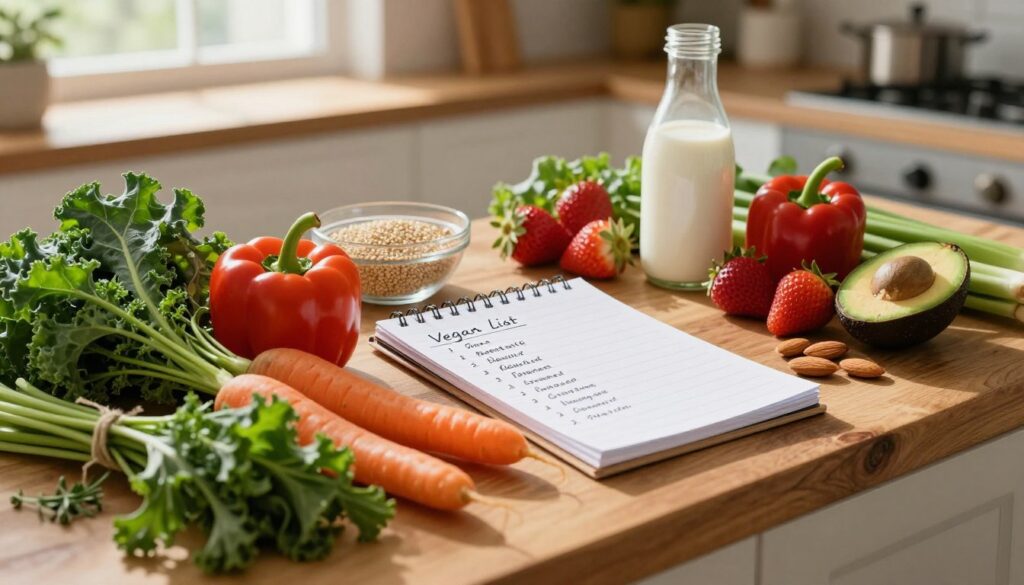
Protein-rich foods to buy
Protein is the foundation of a filling meal. Stock your pantry with shelf-stable items like canned black beans, chickpeas, and lentils. For your fridge, pick up blocks of extra-firm tofu and tempeh, which are versatile enough for stir-fries or baking.
Whole grains, starchy vegetables, and meal-prep staples
Whole grains provide the energy you need to power through your day. Keep staples like rolled oats, brown rice, and quinoa on hand for easy meal prep. Don’t forget starchy vegetables like sweet potatoes and Yukon gold potatoes, as they add heartiness to any bowl or stew.
“The beauty of a plant-based diet lies in the simplicity of whole foods. When you focus on grains, legumes, and fresh produce, you nourish your body with exactly what it needs to thrive.”
Fresh and frozen fruits and vegetables
To keep your 30-day challenge practical, combine fresh produce with frozen options. Fresh greens like spinach and kale are perfect for early-week salads, while frozen berries and broccoli ensure you have nutritious choices even when you cannot get to the store. This mix is one of the most effective vegan tips for maintaining consistency.
Plant-based milks, sauces, seasonings, and convenient foods
Flavor is essential for keeping your meals exciting. Stock up on almond or soy milk, low-sodium vegetable broth, and a variety of spices like smoked paprika, cumin, and nutritional yeast. Having a well-stocked vegan grocery list allows you to whip up a delicious meal in minutes, even on your busiest days.
| Category | Staple Items | Why It Helps |
|---|---|---|
| Proteins | Lentils, Tofu, Beans | Provides satiety and muscle support |
| Grains | Oats, Quinoa, Rice | Offers sustained energy levels |
| Produce | Spinach, Berries, Potatoes | Adds essential vitamins and fiber |
| Flavor | Spices, Soy Sauce, Yeast | Ensures meals remain satisfying |
Days 1–7: Start with Familiar Meatless Meals
Starting a meatless diet does not mean you have to abandon your favorite comfort foods. The first week of your journey is all about building confidence by adapting the meals you already know and love. By keeping your kitchen routine familiar, you can focus on the transition without feeling overwhelmed by complex cooking techniques.
Replace meat and dairy without overcomplicating meals
You can easily swap animal products for plant-based alternatives in your daily cooking. For instance, try using hearty beans or lentils in place of ground meat for your favorite taco night. Simple changes like using almond or soy milk in your morning coffee make a significant difference without requiring a total kitchen overhaul.
Vegetables like mushrooms or cauliflower can provide a satisfying texture in stir-fries and pasta dishes. Focus on these easy swaps to keep your meals recognizable and delicious. Consistency is key during these first seven days as you learn to navigate the grocery store aisles with a new perspective.
Easy vegan recipes for breakfast, lunch, and dinner
Finding reliable vegan recipes is essential for maintaining your momentum. Start your day with a bowl of oatmeal topped with fresh berries and flaxseeds, or enjoy a smoothie packed with spinach and banana. These familiar formats ensure you get the energy you need to start your morning right.
For lunch, consider a hearty grain bowl featuring quinoa, roasted chickpeas, and your favorite seasonal vegetables. Dinner can be as simple as a vegetable-packed pasta with marinara sauce or a savory lentil soup. These meals are approachable, nutritious, and require very little time to prepare.
Manage early hunger, cravings, and changes in digestion
It is normal to feel a bit hungrier than usual as your body adjusts to a higher intake of fiber. To manage this, ensure your portions are large enough to keep you satisfied between meals. Hydration is vital, so keep a water bottle nearby throughout the day to support your digestion.
If you experience cravings, reach for whole foods like nuts, seeds, or fresh fruit instead of processed snacks. Remember that your digestive system needs time to adapt to the increased fiber from beans and vegetables. By eating at consistent times, you will help your body settle into this new, healthy rhythm.
Days 8–14: Discover New Vegan Recipes and Flavors
Entering the second week of your 30-day vegan journey offers a perfect chance to experiment with bold new flavors. You have already built a solid foundation, and now it is time to move beyond simple substitutions. By exploring diverse textures and cooking methods, you will find that plant-based eating is anything but boring.
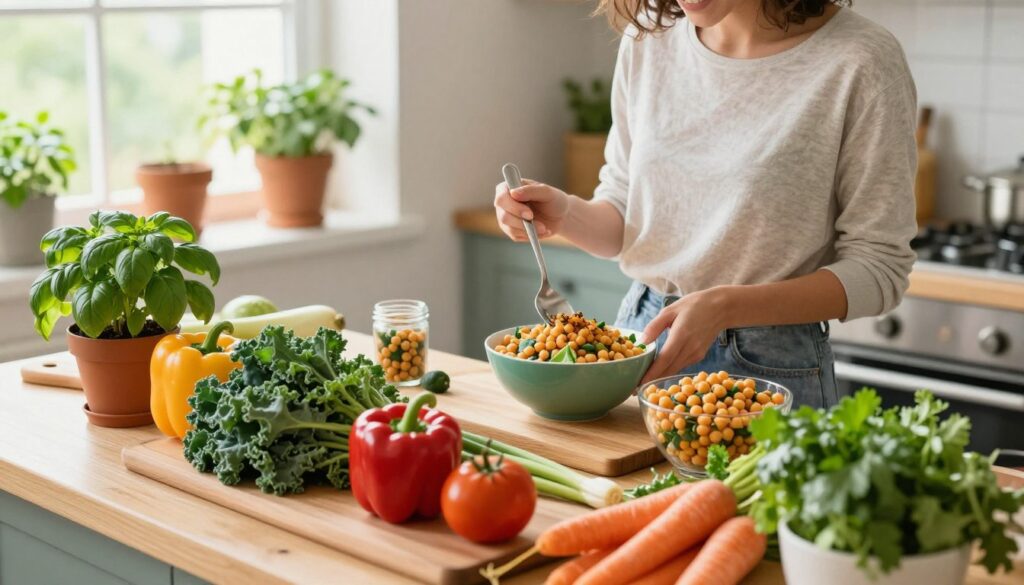
Use beans, lentils, tofu, tempeh, and seitan in different ways
Variety is the secret to staying excited about your food choices. Instead of just steaming your proteins, try pressing tofu to get a crispy texture in a stir-fry or crumbling tempeh into a savory taco filling. Beans and lentils are incredibly versatile, working perfectly in hearty soups, chilled salads, or even blended into creamy dips.
Seitan, often called wheat meat, provides a satisfying chew that mimics traditional proteins in sandwiches or skillet meals. Try these preparation methods to keep your meals interesting:
- Roast chickpeas with smoked paprika for a crunchy salad topper.
- Marinate tofu in soy sauce and ginger before pan-searing.
- Simmer lentils with coconut milk for a rich, comforting curry.
Build satisfying meals with herbs, spices, and sauces
A successful vegan lifestyle relies on building deep, complex flavor profiles. You do not need hours in the kitchen to create a gourmet experience. A simple splash of balsamic glaze, a dollop of tahini, or a handful of fresh cilantro can completely transform a basic bowl of grains and vegetables.
Experimenting with global spices like cumin, turmeric, and za’atar will keep your taste buds engaged. Homemade dressings and marinades are also essential tools. They add moisture and zest to your dishes, ensuring that every bite feels complete and deeply satisfying.
Prepare make-ahead lunches and quick weeknight dinners
Maintaining your momentum requires planning that fits your busy schedule. Preparing large batches of grains or roasted vegetables on Sunday can save you hours during the work week. These staples serve as the perfect base for quick, assembly-style lunches that you can grab on the go.
For weeknight dinners, focus on one-pan meals that minimize cleanup. Whether it is a quick vegetable stir-fry or a hearty bean chili, these recipes ensure you stay on track with your vegan lifestyle without feeling overwhelmed. Consistency is the key to long-term success, and these simple habits make the process feel effortless.
Days 15–21: Focus on Vegan Nutrition and Energy
As you enter the third week, focusing on nutrient density becomes the key to sustained energy. While you have already mastered the basics of meatless meals, this phase is about fine-tuning your intake to ensure you experience the best vegan health benefits. By paying attention to specific micronutrients, you can keep your body feeling vibrant and strong.
Key nutrients to monitor on a vegan diet
To maintain optimal health, you should be mindful of several essential nutrients. While a plant-based diet is naturally rich in many vitamins, you must be intentional about including sources of Vitamin B12, iron, calcium, iodine, and omega-3 fatty acids.
- Vitamin B12: Essential for nerve function; consider a supplement or fortified foods.
- Calcium: Found in tofu, kale, and fortified plant milks.
- Omega-3s: Incorporate chia seeds, flaxseeds, or walnuts into your daily routine.
Pair foods to support iron absorption
Iron is abundant in plant foods like lentils, beans, and spinach, but it is not always absorbed as easily as iron from animal sources. You can significantly improve your iron uptake by pairing these foods with ingredients high in Vitamin C. This simple strategy is one of the many benefits of veganism that encourages a diverse and colorful plate.
“The secret to plant-based vitality lies in the synergy of your ingredients. Pairing iron-rich legumes with citrus or bell peppers transforms your meal into a nutritional powerhouse.”
Try adding a squeeze of lemon juice to your lentil soup or tossing sliced bell peppers into your bean stir-fry. These small adjustments ensure you get the most out of every bite.
Recognize signs that your meals need more calories or protein
It is common to feel a bit of a slump if your body is not getting enough fuel. If you notice persistent hunger, low energy, or difficulty recovering after physical activity, your meals may need a boost in calories or protein. Listen to your body and do not be afraid to increase your portion sizes or add healthy fats like avocado or nuts.
Remember that the long-term benefits of veganism depend on your ability to meet your individual needs. By prioritizing food quality and balance, you will continue to enjoy the positive vegan health benefits that come with a well-planned plant-based lifestyle.
Days 22–28: Make Vegan Living Fit Your Lifestyle
Mastering the art of cruelty-free eating requires a few simple strategies for your busy life on the go. As you reach the final stretch of your challenge, it is time to integrate your new habits into your daily routine outside the kitchen. You can maintain your progress by planning ahead and knowing exactly what to look for in any environment.
Order vegan meals at restaurants and fast-casual locations
Dining out does not have to be a source of stress when you know how to navigate a menu. Most restaurants are happy to accommodate requests if you ask politely about ingredients like butter, honey, or hidden dairy. Always check the sides, as steamed vegetables or roasted potatoes are often naturally plant-based.
- Look for “build-your-own” bowls at fast-casual spots where you can control every topping.
- Check online menus before you arrive to identify potential modifications.
- Ask your server if a dish can be prepared without cheese or cream sauces.
Pack plant-based meals for work, school, and travel
Consistency is the key to long-term success, and packing your own food ensures you always have a healthy option. Investing in high-quality insulated containers keeps your meals fresh, whether you are at the office or on a long flight. Cruelty-free eating becomes much easier when you have reliable, shelf-stable snacks tucked into your bag.
Consider keeping these items on hand for busy days:
- Nuts, seeds, and dried fruit for quick energy.
- Hummus cups with pre-cut vegetable sticks.
- Whole grain crackers or protein-rich energy bars.
Shop for cruelty-free personal care and household products
Your commitment to a plant-based lifestyle can extend far beyond your plate. Many people find that transitioning to cruelty-free eating naturally leads them to look for products that are not tested on animals. You can start by checking labels on your shampoo, soap, and cleaning supplies for the Leaping Bunny logo.
Making these small, intentional changes helps you feel more aligned with your values every single day. By choosing brands that prioritize ethical standards, you support a kinder world while maintaining your new, healthy routine. It is a rewarding way to complete your transformation.
Days 29–30: Review Your Vegan Transformation
You have reached the final two days of your journey, marking a significant milestone in your personal health path. This is the perfect moment to pause and observe the positive shifts that have occurred during your vegan transformation. While these observations are personal and not medical conclusions, they provide valuable insight into how your body responds to plant-based nutrition.
Track changes in energy, digestion, mood, and eating habits
Take a few minutes to journal about your experience over the last month. Consider how your daily energy levels have fluctuated and whether you feel more consistent throughout the afternoon. Many people notice improvements in digestion or a lighter feeling after meals, which is a common part of this vegan transformation.
Reflect on your mood and mental clarity as well. Have you noticed a change in your cravings or your relationship with food? By comparing your current state to how you felt on day one, you can better understand the impact of your new dietary choices.
Identify the meals and routines you want to keep
Now is the time to curate your favorite discoveries from the past month. Look back at your meal logs and identify the recipes that were both delicious and easy to prepare. You should also consider which grocery shopping routines or restaurant strategies helped you stay on track during busy weeks.
Keeping these successful habits will make your future choices much easier. Whether it is a specific breakfast smoothie or a reliable way to order at your local cafe, these small wins are the foundation of a sustainable lifestyle.
Decide whether to continue with a fully vegan or mostly plant-based diet
As you look toward the future, you have the freedom to choose the path that fits your life best. You might decide to embrace a fully vegan lifestyle, or you may prefer a flexible, mostly plant-based approach. Both options offer significant benefits for your health and the environment.
The goal is to maintain a pattern that feels sustainable and enjoyable for the long term. Use the following table to summarize your progress and help guide your next steps.
| Category | Beginning of Challenge | End of Challenge |
|---|---|---|
| Energy Levels | Variable or low | Consistent and steady |
| Meal Planning | Time-consuming | Efficient and routine |
| Food Variety | Limited options | Diverse plant sources |
| Overall Satisfaction | Uncertain | Confident and empowered |
Common Challenges When Transitioning to a Vegan Diet
Transitioning to a vegan diet is a significant lifestyle change that requires patience and a bit of troubleshooting. It is completely normal to encounter hurdles as you adjust your habits and learn to navigate new food choices. By staying flexible and informed, you can overcome these obstacles with ease.
Recovering from an unplanned non-vegan meal
If you accidentally consume a non-vegan ingredient, do not let it derail your progress. Avoid all-or-nothing thinking, which suggests that one mistake ruins your entire effort. Instead, simply acknowledge the situation, review what happened, and return to your next planned meal.
Consistency is far more important than perfection when you are transitioning to a vegan diet. Treat every meal as a fresh start rather than a test of your willpower. This mindset shift helps you maintain long-term success without unnecessary guilt.
Preventing restrictive eating and nutrient gaps
A common mistake is focusing too much on what you are removing rather than what you are adding. Your goal should be to remain adequately nourished by prioritizing calories, protein, and a wide variety of whole foods. Do not fall into the trap of unnecessary restriction, as this often leads to burnout.
Ensure your plate includes diverse sources of nutrients like legumes, nuts, seeds, and colorful vegetables. If you feel tired or hungry, it is often a sign that you need to increase your portion sizes or incorporate more healthy fats. Listen to your body and adjust your intake to support your energy levels throughout the day.
Balancing convenience, budget, and health goals
Many people worry that eating plant-based is expensive or time-consuming, but it does not have to be. You can balance your health goals with your budget by relying on affordable staples like dried beans, lentils, and brown rice. These items are shelf-stable and provide excellent nutrition for a fraction of the cost of processed alternatives.
Batch cooking on weekends can save you significant time during busy work weeks. Additionally, keep your freezer stocked with frozen fruits and vegetables, which are just as nutritious as fresh produce. By choosing a few selective convenience foods for emergencies, you can make transitioning to a vegan diet fit seamlessly into your existing lifestyle.
Conclusion
Embarking on a thirty-day journey transforms how you view food and your daily health. You started by setting clear goals and organizing your pantry. You moved through weekly stages of discovery, from mastering simple meatless meals to exploring complex flavors and essential nutrients.
The final two-day reflection serves as a bridge to your future habits. Take a moment to identify which recipes and routines brought you the most joy. Keep the strategies that fit your unique schedule and personal preferences.
Lasting change grows through consistency and flexibility rather than rigid perfection. You now possess the tools to make informed choices at the grocery store or when dining out at places like Chipotle or Whole Foods. Embrace the progress you made during this month.
Continue to listen to your body as you refine your plant-based lifestyle. Small, steady adjustments lead to significant long-term benefits for your energy and well-being. Your commitment to this challenge provides a solid foundation for a healthier way of eating that lasts well beyond the initial thirty days.